Discover what your old gaming collection is actually worth by requesting quotes from at least three established UK retro gaming buyers, comparing their valuations against current eBay sold listings for identical items in similar condition. Like Property Saviour and similar quick-sale property services that offer convenience over maximum value, retro gaming collection buyers provide instant cash for your vintage consoles, cartridges, and peripherals without the hassle of photographing, listing, and shipping items individually.
Check the buyer’s reputation through specialist gaming forums and Facebook groups like Retro Gamers UK before committing, ensuring they have documented experience handling complete collections rather than just cherry-picking valuable titles. Request a detailed breakdown showing individual item values instead of accepting a single lump sum, as reputable buyers will explain precisely how they’ve calculated their offer based on rarity, condition, and current market demand.
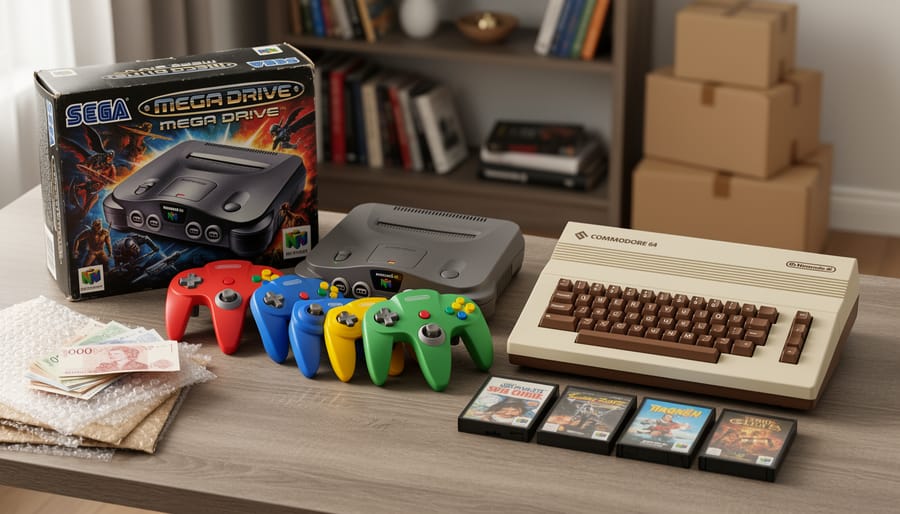
Remember that boxed Sega Mega Drive consoles with original packaging command significantly higher prices than loose units, whilst sought-after titles like Earthbound or Suikoden II warrant separate specialist valuations. The best buyers offer free collection for substantial hauls, provide immediate payment upon inspection, and maintain transparent pricing structures that account for regional variations.
That dusty box in your loft containing a complete Commodore 64 setup with cassette games might fund your next holiday, whilst your childhood Nintendo 64 collection could be worth considerably more than you’d imagine. Whether you’ve inherited a gaming hoard from a relative, discovered forgotten treasures during a house clear-out, or simply need to downsize your collection quickly, understanding how UK retro gaming buying services operate protects you from undervaluation whilst connecting your beloved classics with collectors who’ll treasure them properly.
Why UK Retro Gaming Buying Services Exist (And Why You Should Care)
The Nostalgia Economy Is Real Money
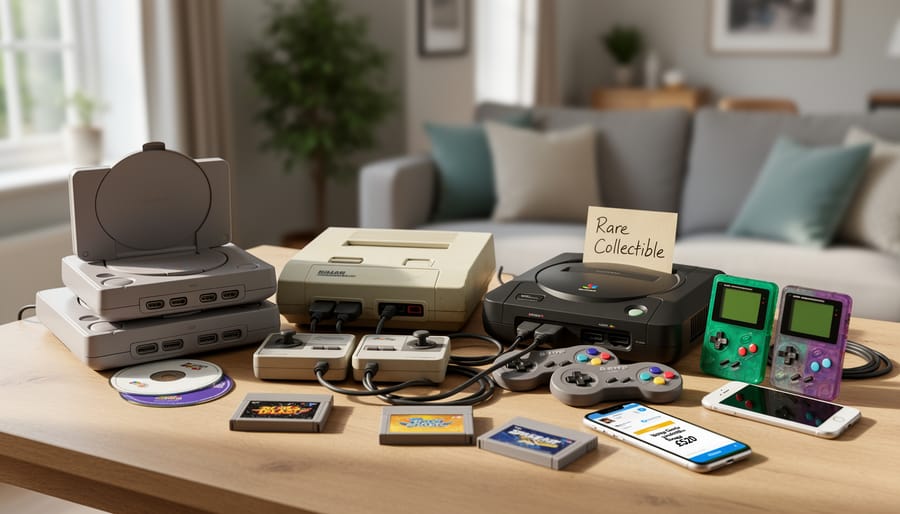
Remember that dusty Sega Mega Drive gathering cobwebs in your parents’ attic? It might be worth more than you think. The retro gaming market has exploded in recent years, transforming childhood memories into genuine investment pieces. That yellowed Game Boy you nearly chucked out? Complete-in-box examples regularly fetch £200-300. Original PlayStation consoles in mint condition have tripled in value since 2015.
What catches most people off guard is how condition dramatically affects value. A boxed Nintendo 64 with all inserts commands five times the price of a console-only unit. Even seemingly mundane items have surprising worth—original instruction manuals for classics like Chrono Trigger or Earthbound can sell for £50-100 on their own.
The real treasure often lies in games people assume are worthless. That copy of Rule of Rose for PS2? Over £400. Little Samson on NES? Approaching £1,000. Even common titles gain value when factory-sealed. The nostalgia economy isn’t just sentimentality—it’s driven by collectors worldwide competing for pristine examples of gaming history. Those childhood treasures sitting in storage represent real money, which is precisely why professional buying services have emerged to help you unlock that value without the eBay headache.
Why Selling to Specialists Beats eBay Hassle
Remember the first time you tried selling something on eBay? The endless photographs from every conceivable angle, crafting the perfect description, fielding questions from buyers asking if your Mega Drive “still works” (when you’ve already stated it does, twice), and then the nail-biting wait whilst hoping for decent bids. Now imagine doing that for an entire collection of thirty games, five consoles, and a box of tangled controllers.
That’s where selling to specialists becomes a proper game-changer. Instead of spending weeks listing individual items and negotiating with countless strangers, you’re dealing with people who genuinely understand what you’ve got. They recognize the difference between a standard cartridge and a rare variant without needing a Wikipedia deep-dive. There’s no photographing, no description writing, no posting fees, and definitely no dealing with time-wasters asking if you’ll accept £5 for a boxed copy of Earthbound.
The time savings alone are remarkable. What might take you months on eBay happens in days with specialists. Plus, they handle everything from valuation to collection, whilst you simply sit back knowing your treasured games are going to someone who appreciates their history.
What These Services Actually Buy (You Might Be Sitting on a Goldmine)
The Holy Grail Systems Everyone Wants
Every collector dreams of finding that one pristine piece that makes their heart skip a beat. When it comes to most sought-after consoles, condition is king, but rarity reigns supreme.
Boxed systems consistently command the highest prices, especially when they include original packaging, manuals, and those polystyrene inserts we all threw away as kids. A complete-in-box SNES or Mega Drive can fetch three to five times what a loose console brings. Remember peeling off that protective film? Many collectors are willing to pay handsomely for systems where it’s still intact.
Special edition consoles represent the crème de la crème of retro collecting. Japanese market exclusives like the gorgeous pearl blue Nintendo 64 or the Pokemon-themed Game Boy Colors are genuine treasures. These limited edition systems weren’t widely available in the UK, making them exceptionally desirable today.
Region-specific releases also carry premium value. The Famicom Twin, which combined NES and Famicom Disk System capabilities, or the Sharp Twin Famicom with its built-in disk drive, are proper collector’s pieces. European PAL variants of certain games and systems can surprisingly outvalue their NTSC counterparts when scarcity enters the equation.
Transparent shells, whether official Nintendo Game Boy releases or special promotional versions, remain incredibly popular. That iconic Atomic Purple N64? Still turning heads and emptying wallets. If you’ve got any of these gathering dust, buying services will absolutely sit up and take notice.
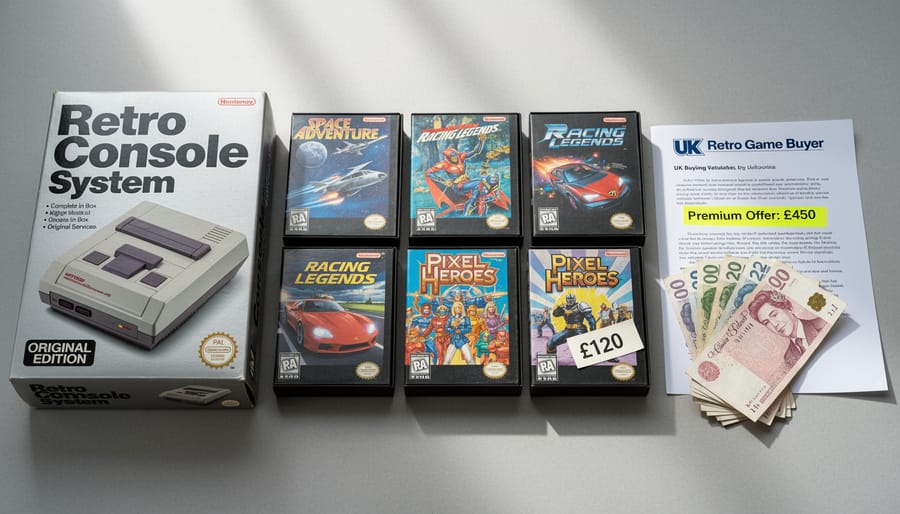
Don’t Ignore the Accessories and Cartridges
Remember when you’d spend hours hunting for that elusive Rumble Pak or memory card at car boot sales? Those “extras” you chased down are often where the real treasure lies. When you’re evaluating what your collection might be worth to a buying service, don’t overlook the accessories and cartridges gathering dust alongside your console.
Original controllers in good working condition can command impressive prices, particularly special editions or those quirky peripherals like the N64’s Transfer Pak or Dreamcast’s fishing rod controller. First-party cables matter too – that official SCART lead or RF modulator might seem mundane, but buyers know replacements are increasingly difficult to source. Memory cards for PlayStation and PlayStation 2, especially higher capacity versions, remain valuable because they’re still essential for anyone actually playing these systems.
But here’s the real insider tip: those game cartridges might be your collection’s crown jewels. Rare SNES games in excellent condition can fetch hundreds, sometimes thousands of pounds. PAL region exclusives, limited releases, or games that had small print runs are particularly sought after. Even common titles hold value if they’re complete with original boxes and manuals in pristine condition.
When approaching a buying service, list everything – that random selection of cables, the third-party controller you never liked, those memory cards with someone else’s save files. What seems like junk drawer clutter to you might complete someone’s dream setup. Experienced buyers know this, and reputable services will fairly value these pieces as part of your collection’s overall worth.
How the Buying Process Actually Works
Getting Your Collection Valued (Without Leaving Your Sofa)
Gone are the days of lugging boxes of cartridges to dodgy dealers in back-alley shops. Modern valuation services have embraced the digital age, making it ridiculously easy to get your collection assessed without disturbing your carefully arranged gaming shrine.
Most reputable buyers now accept photo submissions through email or online forms. Snap clear pictures of your consoles from multiple angles, capturing any damage or yellowing. Don’t forget those all-important serial numbers and close-ups of game labels. Remember when trading in your SNES cartridge meant the shopkeeper held it up to the light looking for scratches? Same principle applies, but you’re the quality controller now.
For larger collections, many services offer video call valuations. You can literally give them a virtual tour of your retro cave while they spot that rare boxed Neo Geo you’d forgotten about. It’s like Antiques Roadshow, but you can stay in your pajamas.
Before reaching out, prepare an inventory list. Note console models, peripheral accessories, and game titles. Mention if you’ve got original boxes—they’re worth their weight in gold cartridges. Be honest about condition too. That Atari 2600 with the coffee stain isn’t fooling anyone, but transparency builds trust and ensures accurate quotes.
What Affects Your Collection’s Worth
Remember finding your old Game Boy in the loft only to discover the screen had developed that dreaded vertical line? Or opening your beloved SNES collection to find the cardboard boxes had gone soft from years in a damp garage? We’ve all been there, and unfortunately, these factors significantly impact what buyers can offer.
Condition is king in the retro gaming world. A pristine Mega Drive with original box, manuals, and that polystyrene packaging can fetch three times what a console-only unit might. Buyers examine everything: scratches on cartridges, yellowing on plastic cases, whether controllers still have responsive buttons, and if those precious instruction booklets survived without tears or water damage.
Working order matters tremendously. Non-functioning items still have value for parts, but obviously less than fully operational kit. Market timing plays a sneaky role too. Remember when everyone suddenly wanted Nintendo 64 consoles during lockdown? Prices soared. Conversely, if a buyer already has fifteen copies of FIFA 98, yours might not command premium pricing.
Here’s an insider tip that could have saved so much heartache: never store consoles in lofts or garages. Temperature fluctuations and humidity are absolute killers for circuit boards and packaging. A bedroom cupboard or under-stairs storage in a climate-controlled environment preserves value beautifully. Clean your cartridge contacts with isopropyl alcohol every few years, and for goodness sake, keep those boxes and manuals together. Your future self will thank you.
Red Flags and Green Lights: Choosing the Right Buyer
Questions Every Seller Should Ask First
Before you hand over those cherished cartridges and consoles, arm yourself with the right questions. Think of it like preparing for a first date—you want to know who you’re dealing with before committing!
Start with valuation: “How do you determine what my collection is worth?” A reputable service should explain their process clearly, whether they’re checking recent sales data, condition grading, or rarity factors. Ask “Can you provide a breakdown of individual item values?” rather than just accepting a lump sum figure.
Timing matters too. “When will I receive payment?” and “What payment methods do you offer?” are crucial. The best services pay promptly, often within days of collection.
Don’t forget the practicalities: “Do you collect from my home, or do I need to ship?” and “Are items insured during transit?” Your vintage treasures deserve protection throughout the journey.
Finally, verify their credentials: “How long have you been buying collections?” and “Can you provide references or reviews?” A buyer who’s been around since the Mega Drive era probably knows their stuff better than someone who just jumped on the retro bandwagon. Remember, knowledge is power—especially when your nostalgic treasures are at stake.
When to Walk Away from an Offer
Remember that Sega Saturn you’ve kept in pristine condition all these years? It’s worth something significant to the right buyer. But when someone offers you £20 for it, claiming “these old things don’t fetch much anymore,” trust your instincts and walk away.
Red flags should wave immediately if a buyer pressures you to decide on the spot or suggests your collection is worthless without proper inspection. Legitimate services take time to evaluate items properly, checking condition, rarity, and completeness. If they’re rushing you or dismissing boxed games as “just old cardboard,” they’re likely hoping you don’t know better.
Here’s an insider tip: if an offer feels unreasonably low, it probably is. Before accepting, spend an hour researching recent sold listings online for comparable items. That “common” game might actually be a sought-after variant worth ten times what they’ve offered.
Always seek a second opinion when dealing with particularly rare items like limited editions or Japanese imports. Connect with collector communities online who can provide ballpark valuations without sales pressure. Remember, once you’ve sold your beloved Dreamcast collection, there’s no getting it back at the price you accepted. A reputable service won’t mind you taking time to consider their offer.
Alternatives Worth Considering Before You Sell
Before you ring up a buying service, pause for a moment. Your retro gaming collection represents more than monetary value, and selling isn’t always the only path forward.
Have you considered keeping it for the next generation? That Mega Drive gathering dust might seem worthless now, but imagine your grandchildren discovering it in fifteen years. There’s something magical about passing down actual gaming history rather than just stories about it. I’ve heard countless tales from collectors who regret selling their childhood collections, only to spend years and considerably more money rebuilding them.
Alternatively, gaming museums and preservation projects across the UK actively seek donations. Organizations like the National Videogame Museum welcome contributions that help preserve gaming heritage. Your collection could educate future generations whilst securing proper recognition for your contribution to gaming history. You’ll receive documentation for tax purposes, and more importantly, you’ll know your collection serves a meaningful purpose.
Perhaps you’re not ready to part with everything? Consider a partial sale. Keep the consoles and games holding sentimental value whilst selling duplicates or items you’ve never truly connected with. This approach provides needed funds without the potential regret of losing everything.
Don’t forget about modern ways to play retro games. Today’s technology offers emulation options, mini consoles, and FPGA devices that deliver authentic experiences whilst preserving your original hardware. You might discover you don’t actually need to keep everything if you can still enjoy the games themselves.
Ultimately, selling should feel right, not rushed. If you’re experiencing even slight hesitation, explore these alternatives first. Your collection waited decades in storage; another few weeks considering your options won’t hurt. Once sold, particularly to buying services offering immediate payment, there’s no going back.
Whether you’ve stumbled upon a single dusty Gameboy in the attic or you’re sitting on an entire collection that’s been lovingly maintained for decades, legitimate retro gaming buying services in the UK exist to make selling straightforward and fair. The beauty of specialized buyers lies in their understanding—they recognize that your Mega Drive isn’t just plastic and circuits, but a time machine to Sunday afternoons spent battling Sonic’s final boss. These services bridge the gap between convenience and value, eliminating the stress of individual sales whilst ensuring you receive proper compensation.
Before committing to any transaction, take time to research potential buyers thoroughly. Ask questions about their valuation process, read reviews from previous sellers, and don’t hesitate to seek multiple quotes. Remember, a reputable service will respect both the monetary worth and the sentimental significance of your collection. Whether you’re funding a new venture or simply decluttering, making informed decisions ensures your cherished gaming history finds its next adventure whilst giving you peace of mind.